JOURNAL
THE SPACE YOU CAN'T SEE
There are entire businesses built around helping people organise their homes. Cupboards are emptied, wardrobes are sorted, and forgotten items finally resurface — expired snacks at the back of the pantry, shopping bags tucked into every corner, clothes that haven’t been worn in years.
Most people see this as an organisation problem.
We see it as a planning problem.
Homes don’t become cluttered overnight. Life simply accumulates over time. Groceries, luggage, children’s school bags, cleaning supplies, pet food, seasonal decorations, hobby equipment, and the countless small things that become part of everyday living. If they don’t have a place to belong, they’ll eventually find one on the dining table, kitchen counter, or the nearest empty chair.
WHERE SPACE PLANNING BEGINS
This is where space planning and storage design begin.
Before deciding how many cabinets or built-in storage units to build, we first understand what needs to be stored. Not every item deserves the same priority, and not every home needs the same solution.
A family that enjoys cooking will use a kitchen very differently from someone who mostly dines out. Someone who travels frequently needs space for luggage. A homeowner who works from home may need room for files and equipment that someone else would never own.
The layout should respond to these differences.
Storage should be considered alongside the way a home is used, rather than added afterwards when there is nowhere left to put things.
WHAT THE HOME NEEDS TO HOLD
Good storage design isn’t about creating more cupboards for the sake of it.
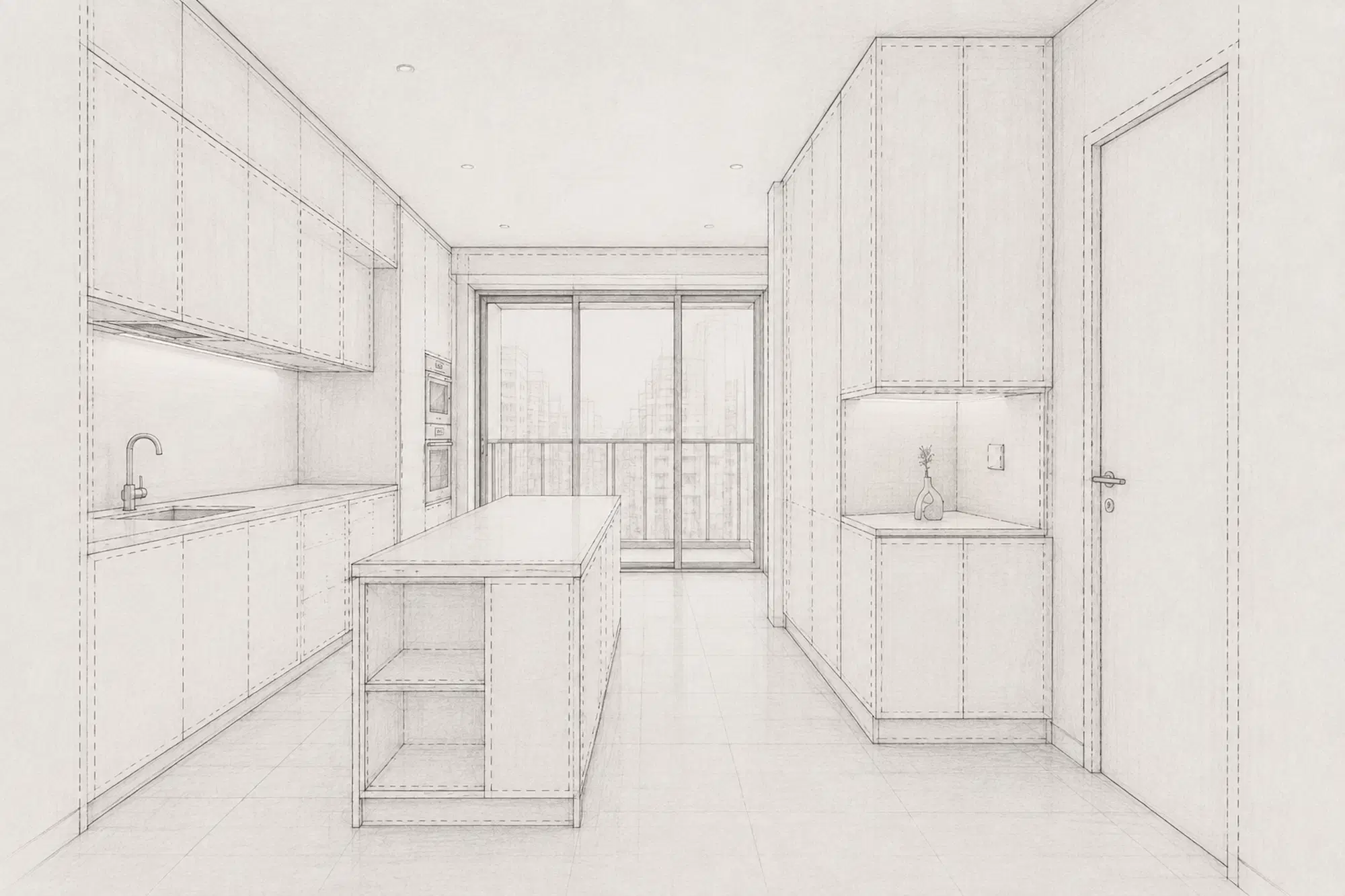
It is about deciding what needs to be close at hand, what can be stored away, and what deserves a dedicated place. It might mean deeper kitchen drawers for appliances, a concealed space for cleaning equipment, a proper home for luggage, or built-in storage that keeps everyday items within reach without leaving them on display.
These decisions may seem small individually. Together, they have a significant effect on how a home feels and functions.
A well-planned home doesn’t necessarily have more storage.
It simply makes better use of the space it already has.
MAKING ROOM FOR WHAT BELONGS
The best storage solutions are often the ones you barely notice.
They sit within the architecture of the room, support the layout, and make everyday routines easier without becoming the focus of the space.
Because storage isn’t about fitting more into a home.
It’s about making room for the life that’s already there.